Why Go Organic
Why Organic Agriculture Matters
Organic agriculture is a farming system designed to work with natural biological processes rather than relying on synthetic chemical inputs.
Organic farmers focus on building soil fertility, supporting biodiversity, and maintaining ecological balance.
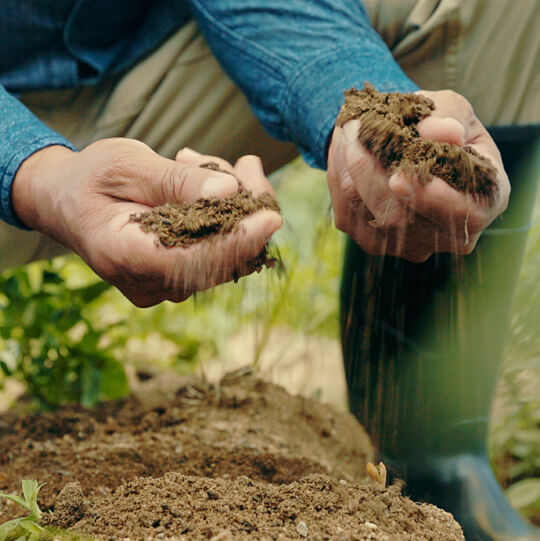
These practices improve soil structure, enhance water retention, and create resilient farming systems capable of adapting to changing environmental conditions.
Research conducted by Rodale Institute and other agricultural institutions demonstrates that organic farming systems can produce competitive yields while delivering environmental and economic benefits.
Key outcomes associated with organic farming include:
- Improved soil health and organic matter
- Reduced reliance on synthetic fertilizers and pesticides
- Greater water infiltration and drought resilience
- Increased biodiversity
- Economic opportunities for farmers through organic price premiums
Learn more about the science behind organic farming.
Understanding Organic Agriculture
The Differences between Organic and Conventional Farming
Conventional agriculture typically relies on synthetic fertilizers, herbicides, and pesticides to maximize crop yields. While productive, these systems often depend heavily on external inputs that can increase the cost of farming and can degrade soil health over time.
Organic farming takes a different approach—prioritizing ecological balance and long-term soil fertility. Organic farmers rely on biological processes and natural nutrient cycling rather than synthetic chemicals.
Common organic practices include:
- Crop rotation
- Cover cropping
- Compost and organic soil amendments
- Biological pest management
- Integrated livestock systems
Learn more about the differences between organic and conventional farming.
Core Organic Farming Practices
Soil Health
Healthy soil is the foundation of productive farming systems.
Organic practices build soil organic matter, improve microbial diversity, and enhance soil structure. These improvements increase water retention, improve nutrient cycling, and support stronger plant growth.
Explore Rodale Institute soil health research:
https://rodaleinstitute.org/why-organic/organic-farming-practices/soil-health/
Cover Crops
Conventional farmers rely on synthetic fertilizers and chemical herbicides to return nutrients to their soils and fight weeds. Those methods have unintended consequences, including water pollution, soil erosion, and loss of essential biodiversity.
Since synthetic inputs aren’t allowed in organic agriculture, organic farmers rely on other methods, including cover cropping, to achieve the same results.
Cover crops primary job is to improve the soil – they serve as living mulch. They are planted in between growing seasons in bare fields to protect the soil from erosion and nutrient loss. Cover crops have many benefits:
- Preventing soil erosion
- Fixing nitrogen
- Increasing soil organic matter
- Suppressing weeds
- Enhancing water availability and improving water infiltration
- Controlling pests and diseases
- Increasing biodiversity
Cover cropping is one of the most widely used soil health practices in organic agriculture. You can learn more about cover cropping at https://rodaleinstitute.org/why-organic/organic-farming-practices/cover-crops/
Crop Rotation
If a farmer plants the same crops in the same fields during every growing season, the same nutrients will repeatedly be removed from the soil. Pests will make a permanent home in field, and diseases will have an opportunity to develop and mature. The only treatment in cases like these is to increase levels of chemical fertilizers and pesticides in order to keep yields high while keeping bugs and disease at bay.
Crop rotation is a solution that will return nutrients to the soil without synthetic inputs. This practice involves the sequential planting of different crops on the same plot of land to restore soil health, optimize nutrients in the soil, and combat pest and weed pressure.
A simple rotation might involve two or three crops, and complex rotations might incorporate a dozen or more.
This practice helps:
- Break pest and disease cycles
- Improve soil fertility
- Reduce weed pressure
- Support soil biodiversity
Diverse crop rotations are essential to maintaining healthy organic farming systems.
Pest Management
Pests are a common challenge for farmers, and organic farmers manage the challenge through ecological strategies rather than synthetic pesticides.
These approaches include:
- Cultivating healthy soil which leads to healthy plants
- Encouraging beneficial insects like ladybugs
- Rotating crops
- Increasing habitat diversity
- Using biological pest control
- Planting pest-resistant crop varieties
These methods strengthen ecosystem balance and reduce pest pressure naturally.
Livestock Integration
Livestock are an important component in a fully regenerative organic farming system. Livestock on an organic farm are managed differently than livestock on conventional farms. Pasture is emphasized in an organic livestock system, and antibiotic and hormone use is restricted. The result is a better quality of life for animals raised organically than their conventional counterparts.
The presence of livestock on a farm contributes to:
- Nutrient enrichment through manure
- Improved pasture health
- Diversified farm income
- Increased soil fertility
Learn more about organic farming practices at https://rodaleinstitute.org/why-organic/organic-farming-practices/
Together, We Can Grow a Better Future